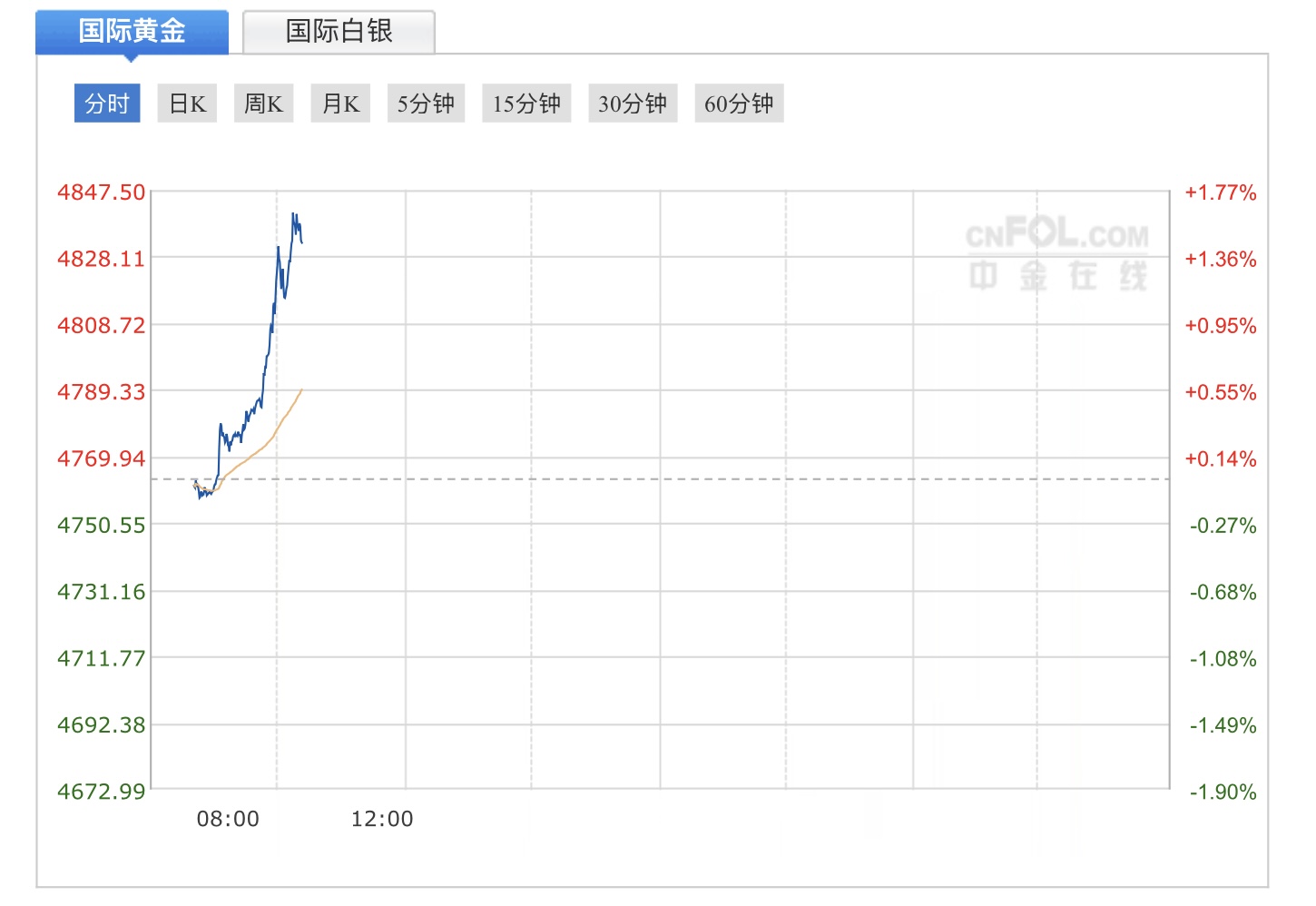
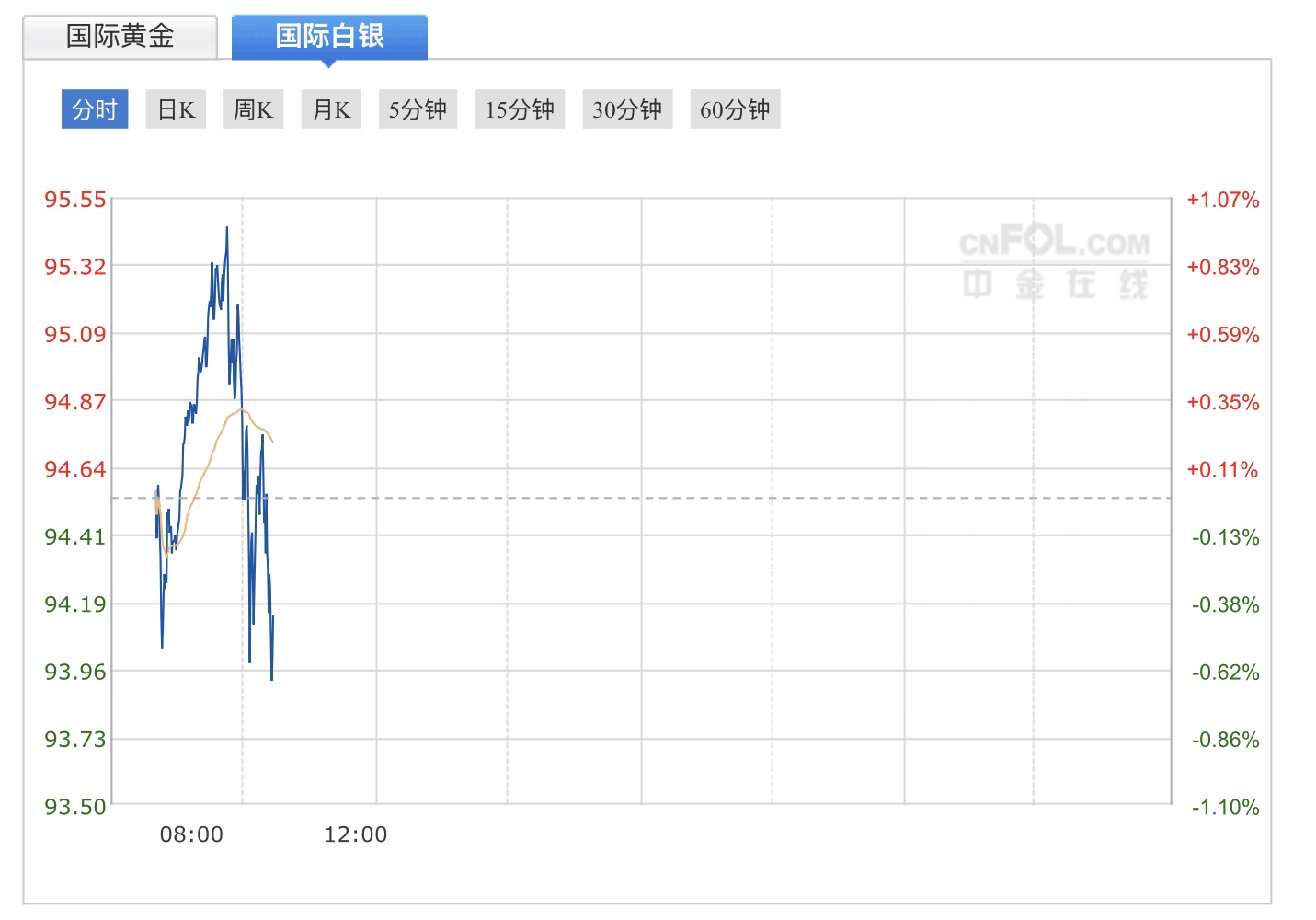
Amid sustained inflows into safe-haven assets, precious metal prices extended their rally. During Tuesday’s Asian trading session, spot gold climbed to around USD 4,847 per ounce, with intraday gains nearing 1.8%; spot silver surged to a high of USD 95.3 per ounce, with gains at one point exceeding 1%. Both metals simultaneously set new record highs. As global risk appetite continued to cool, gold and silver emerged as some of the strongest-performing defensive assets in the market.
 (Image Source: Cnfol.com)
(Image Source: Cnfol.com)
Recent market volatility has been triggered by renewed signals of trade and geopolitical uncertainty from the United States. Former U.S. President Donald Trump recently indicated the possibility of imposing a new round of tariffs on European allies and adopting a tougher stance on issues related to Greenland, raising concerns over the stability of the global trade order and traditional alliance structures. As a result, risk aversion has risen sharply.
U.S. Assets Under Pressure as Safe-Haven Flows Shift Toward Precious Metals
With the “Sell America” trade once again dominating market sentiment, U.S. assets broadly weakened. Declines in U.S. Treasury prices pushed the 10-year Treasury yield to around 4.3% intraday, while the three major U.S. equity indices posted their largest single-day declines of the year, led by technology stocks. Overall market risk appetite deteriorated notably.
In contrast, precious metals continued to attract steady capital inflows. Against the backdrop of simultaneous pressure on global equities and bonds and waning appeal of U.S. dollar–denominated assets, gold and silver have been increasingly viewed as effective tools for hedging macro uncertainty and diversifying exposure away from the dollar, further highlighting their defensive characteristics.
“Currency Debasement Trade” Narrative Gains Momentum
From an asset allocation perspective, the latest surge in gold and silver prices is not driven by short-term events, but rather by heightened macro uncertainty combined with portfolio rebalancing needs. As geopolitical risks rise and fiscal and trade outlooks become more complex, some investors have opted to reduce exposure to the U.S. dollar and Treasuries, reallocating toward physical assets for risk hedging. The so-called “currency debasement trade” has once again drawn attention.
Demand-Side Factors Support the Medium-Term Outlook
On the fundamentals side, demand dynamics continue to underpin prices for both metals. Gold demand has been primarily supported by ongoing central bank purchases, with medium- to long-term demand remaining stable amid diversification of global foreign exchange reserves. Silver, meanwhile, benefits not only from its safe-haven appeal but also from growing industrial demand driven by developments in renewable energy, data centers, and next-generation energy storage technologies. Supply growth has remained relatively constrained.
Overall, amid persistent global uncertainty and a defensive tilt in asset allocation, the medium-term outlook for precious metal prices remains skewed to the upside.


More Content