The electric vehicle industry is experiencing rapid growth, driven by the increasing demand for environmentally friendly and sustainable transportation solutions. Technological innovations, particularly in battery performance and cost reduction, are propelling this trend. Global policy support, such as subsidies and the construction of charging infrastructure, further promotes the widespread adoption of electric vehicles. The market is highly competitive, with both startups and traditional brands vying for market share. As consumer awareness grows and product options diversify, the electric vehicle industry is expected to continue its growth.
Overview of China's Electric Vehicle Market
· Market Size: It has become a leader in the global electric vehicle industry, with substantial production capacity and consumer demand.
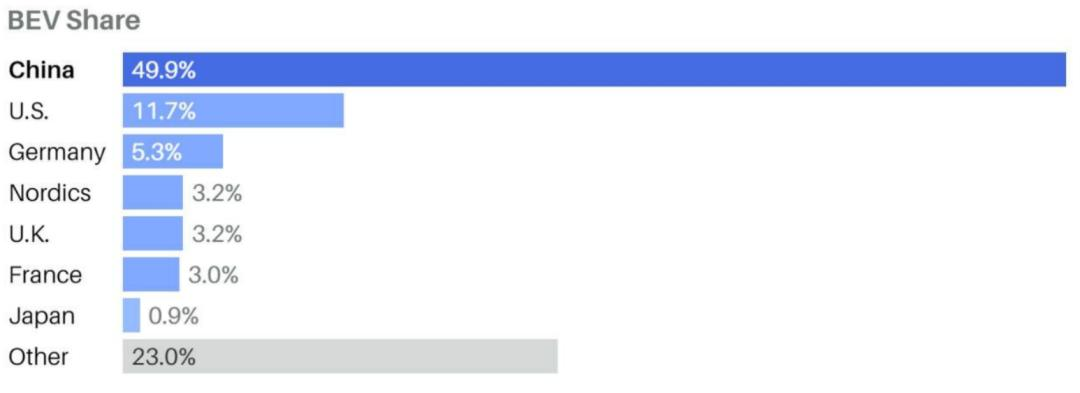
(Source: Citi; Ward's Auto; European Automobile Manufacturers' Association)
· Policy Driven: The Chinese government is actively promoting the development of the electric vehicle industry through new energy vehicle subsidy policies, preferential tax policies for purchasing vehicles, and restrictions on driving and purchasing.
· Industry Chain Development: China has established a complete electric vehicle industry chain, including battery manufacturing, motor and electric control systems, and vehicle assembly.
· Rise of Local Brands: Local electric vehicle brands such as BYD, NIO, XPeng, and Li Auto have rapidly developed and have occupied an important position in the market.
· International Competition: Chinese electric vehicle companies are not only competitive in the domestic market but are also actively exploring the international market, competing with international brands. According to CleanTechnica data, in the first quarter of this year, Chinese models occupied 16 out of the TOP20 model list, with 2 new models added compared to the first quarter of last year, and the sales volume of the 16 models increased by 11% year-on-year.
· Innovative Technology and Infrastructure Construction: Chinese companies continue to make breakthroughs in the core technology of electric vehicles, including battery technology, autonomous driving, and intelligent networking. Enterprises and the government are heavily investing in the construction of charging infrastructure to improve the convenience and practicality of electric vehicles.
Major Electric Vehicle Company Introduction
|
Company/Brand |
Company Background and Product Line |
|
BYD |
Headquartered in Shenzhen, China, BYD is one of the world's leading battery and electric vehicle manufacturers. The company offers a diversified range of electric vehicle products, including Battery Electric Vehicles (BEVs) and Plug-in Hybrid Electric Vehicles (PHEVs). BYD possesses extensive expertise in electric vehicle technology, particularly in the field of battery research and development. |
|
NIO |
NIO is an innovative electric vehicle manufacturer renowned for its user-centric design philosophy and innovative service models. It boasts a lineup of high-end electric SUVs and sedans that have gained market recognition for their high performance and advanced technology. NIO also provides comprehensive energy solutions, including battery swap services and home charging stations. |
|
Tesla Shanghai |
Tesla's Shanghai Gigafactory is its first production facility outside the United States, primarily manufacturing the Model 3 and Model Y vehicles. The Shanghai factory not only meets the demand of the Chinese market but may also export to other Asian countries. Tesla is famous for its innovative electric vehicle technology, autopilot features, and global charging network. |
|
XPeng |
XPeng is a rapidly growing electric vehicle manufacturer in China, focusing on the research and development of intelligent electric vehicles. The company offers a variety of models, including SUVs and sedans, emphasizing intelligence and autonomous driving technology. XPeng has also developed its own autonomous driving system and intelligent in-car operating system. |
|
Li Auto |
Li Auto is an innovative electric vehicle company known for producing high-performance electric SUVs. Its debut model, the Li ONE, utilizes range-extender electric technology to provide a longer driving range. The company is committed to meeting the needs of family users with its advanced electric vehicle products. |
|
AITO |
AITO, under Xiaokang Co., Ltd., is a new energy automobile brand focused on the development of intelligent electric vehicles. AITO is dedicated to offering electric vehicle solutions that combine intelligent technology with eco-friendly concepts. |
|
Leapmotor |
Leapmotor is an emerging electric vehicle manufacturer offering competitive electric vehicle models. The company focuses on the intelligent and internet capabilities of electric vehicles, aiming to provide a smart driving experience for young consumers. |
|
Zeekr |
Zeekr is a high-end electric vehicle brand under Geely Automobile, committed to developing high-performance and high-quality intelligent electric vehicles. Zeekr's product line includes a range of electric sedans and SUVs, noted for their advanced technology and luxurious design. Xiaomi is a diversified technology company that has recently begun to enter the electric vehicle sector. |
|
Xiaomi |
Xiaomi's electric vehicle project is still in its early stages, but the company plans to leverage its experience in smart hardware and internet services to develop innovative electric vehicle products. |
Sales Ranking Situation
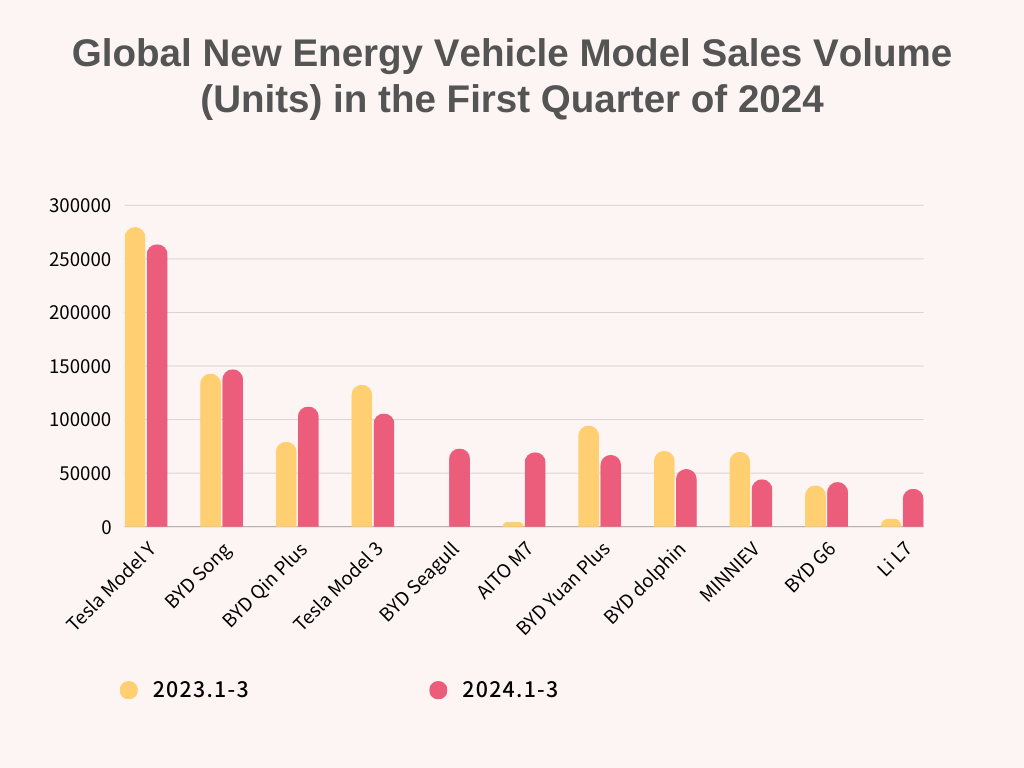
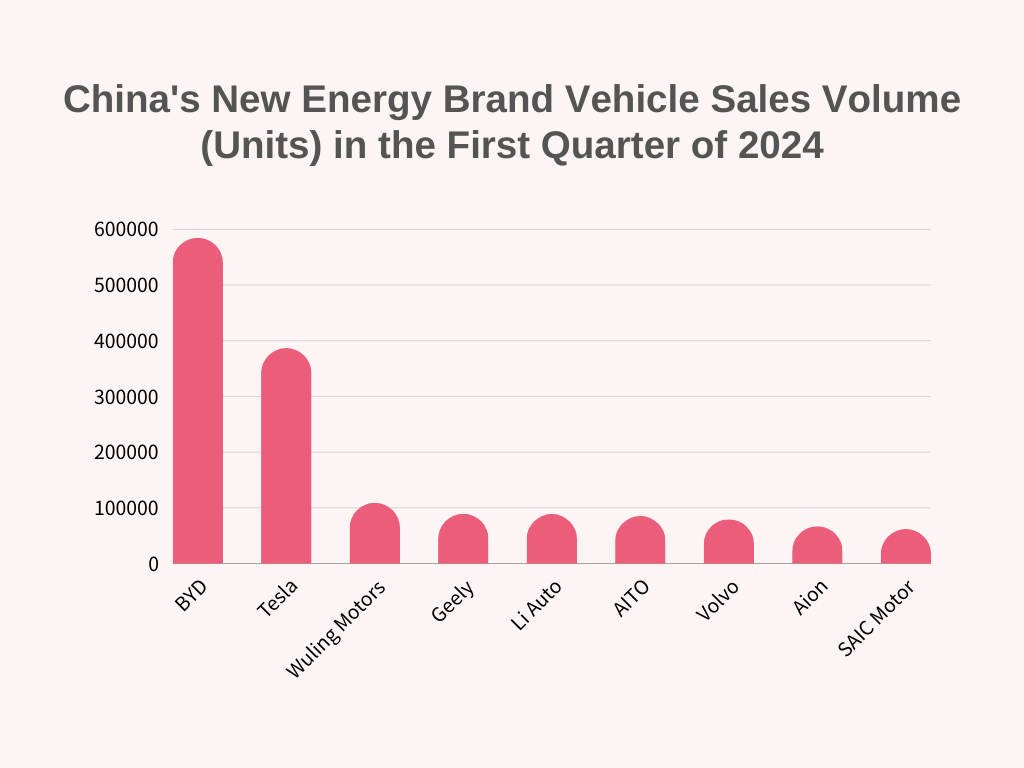 (Chart by: uSMART, Data source: hk01.com, 2024.05.18)
In the first quarter of this year, the Tesla Model Y remains the most popular new energy vehicle globally, but it has seen a decline of 5.7% compared to the same period last year. Its "brother" model, the Tesla Model 3, has an even more pessimistic global sales performance, with a year-on-year drop of over 20%.
Among the TOP20 models list, Chinese models occupy 16 seats, adding 2 new models compared to the first quarter of last year.
The Qin PLUS, benefiting from its record sales performance in March, has surpassed the Tesla Model 3. The upcoming new BYD Qin L is expected to enter the market and may potentially take over the market share of the Qin PLUS.
The market performance of the three brands, AITO, Geely, and Li Auto, is the most eye-catching. AITO, benefiting from the explosive sales of the new M7, has seen a year-on-year surge of over 6.3 times, ranking eighth; Li Auto, AITO's "archenemy," has also seen a significant increase of 66.7%, leading AITO and ranking seventh.
Benefiting from the support of brands such as Extreme Power, Lynk & Co, Geometry, and Zeekr, Geely's competitiveness in the global new energy market has steadily improved. In the first quarter of this year, Geely surpassed Ideal, Nio, Chang'an, Volkswagen, SAIC and other major brands, with a year-on-year increase of 76%, and it has risen to the sixth place in the rankings. (The data above is from hk01.com)
Future Development Trends
The future development of electric vehicles heralds a new era driven by technological innovation and environmental sustainability. Advances in battery technology will bring longer ranges and faster charging speeds, while cost reductions will make electric vehicles more economical. With the rapid expansion of charging infrastructure, convenience will be greatly improved, further promoting the popularization of electric vehicles.
The development of autonomous driving and connected car technology will make electric vehicles the core of smart transportation systems, enhancing road safety and travel efficiency. Policy support will continue to provide a strong boost to the electric vehicle market, and environmental regulations will accelerate the transition from traditional fuel vehicles to electric vehicles. The growth of electric vehicles will also drive the development of the sharing economy and new types of mobility services, changing people's travel habits.
Furthermore, as the market continues to mature, the variety of electric vehicles will become more diverse, meeting various needs from personal commuting to commercial transportation. Optimization of the supply chain and the realization of economies of scale will further reduce the costs of electric vehicles, making them more widespread. The global competitive landscape will become more intense with the rise of emerging electric vehicle brands, driving the entire industry forward. In summary, the future of electric vehicles will be a new era defined by innovation, intelligence, and environmentally friendly technology.
Follow us
Find us on Twitter, Instagram, YouTube, and TikTok for frequent updates on all things investing.
Have a financial topic you would like to discuss? Head over to the uSMART Community to share your thoughts and insights about the market! Click the picture below to download and explore uSMART app!


Disclaimers
uSmart Securities Limited (“uSmart”) is based on its internal research and public third party information in preparation of this article. Although uSmart uses its best endeavours to ensure the content of this article is accurate, uSmart does not guarantee the accuracy, timeliness or completeness of the information of this article and is not responsible for any views/opinions/comments in this article. Opinions, forecasts and estimations reflect uSmart’s assessment as of the date of this article and are subject to change. uSmart has no obligation to notify you or anyone of any such changes. You must make independent analysis and judgment on any matters involved in this article. uSmart and any directors, officers, employees or agents of uSmart will not be liable for any loss or damage suffered by any person in reliance on any representation or omission in the content of this article. The content of this article is for reference only. It does not constitute an offer, solicitation, recommendation, opinion or guarantee of any securities, financial products or instruments.The content of the article is for reference only and does not constitute any offer, solicitation, recommendation, opinion or guarantee of any securities, virtual assets, financial products or instruments. Regulatory authorities may restrict the trading of virtual asset-related ETFs to only investors who meet specified requirements.
Investment involves risks and the value and income from securities may rise or fall. Past performance is not indicative of future performance.


More Content