Market NewsIntroducing Financial and Economic Terms: "Hard Landing," "Soft Landing," and "Nonfarm Payrolls Data"
What is a "hard landing"?
A hard landing is like slamming on the brakes suddenly in a car; the economy also suffers a sudden and severe shock and downturn. It signifies a sharp decrease in the pace of economic growth, even leading to an economic recession. This economic state often arises from overheating, burst bubbles, or accumulated financial risks. In a hard landing scenario, there are typically widespread unemployment, business closures, and stock market crashes, severely impacting the entire economic system. The 2008 global financial crisis is a classic example of a hard landing case, resulting in not only an economic recession but also triggering turmoil in global financial markets.
What is a "soft landing"?
A soft landing refers to a situation where economic growth slows down but still maintains positive growth. Similar to gradually decelerating a car, the economy slows down gradually. It signifies a slowdown in the pace of economic growth but avoids sudden stagnation or recession. This situation is usually the result of effective macroeconomic policies, stable financial markets, and moderate corporate management. The impact of a soft landing on the economy is minimal, the consequences are controllable, and it is easier to predict and manage. It helps the economy transition smoothly, avoiding severe fluctuations. China's supply-side structural reform from 2012 to 2017 is a successful example of a soft landing, promoting sustainable economic development through industrial upgrading and innovation.
What is a "no landing"?
In simple terms, "no landing" describes an economic scenario where despite a significant increase in interest rates (such as the Federal Reserve's rate hikes), the economy continues to grow, the labor market remains strong, and inflation levels are not effectively controlled. Compared to "hard landing" and "soft landing," "no landing" occurs when the economy maintains a certain momentum of growth in an environment of high interest rates and unresolved inflation issues. This phenomenon poses a challenge for policymakers and investors because traditional economic theory suggests that raising interest rates can curb inflation but will also slow down economic growth. However, "no landing" breaks this conventional expectation, showing the economy's resilience to interest rate hikes.
Comparison of key points
|
Hard Landing |
Soft Landing |
No Landing |
|
|
Economic Condition |
Sharp decrease in economic growth rate, leading to an economic recession |
Slowdown in economic growth, with the pace decreasing but still maintaining positive growth |
Maintaining economic growth rate, but inflation is difficult to control |
|
Inflation Level |
Gradually stabilizing or decreasing |
Often persistently high |
Persistently high and difficult to control |
|
Interest Rate Level |
May gradually rise, but relatively stable |
May sharply increase to control inflation |
Remains high or continues to rise |
|
Unemployment Rate |
Gradually rising but relatively stable |
Significantly increasing |
Remains relatively stable or slightly increasing |
|
Market Confidence |
Relatively stable or slightly declining |
Market confidence severely shaken |
Market confidence complex, with concerns about inflation and economic prospects |
What is Nonfarm Payrolls Data?
The release of nonfarm payrolls data significantly impacts financial markets, often causing fluctuations in stock, forex, and bond markets as it provides crucial insights into economic growth and monetary policy.
In the realm of economics, nonfarm payrolls data is a highly significant indicator primarily reflecting the employment situation of the U.S. nonfarm population. Specifically, it includes three key metrics: nonfarm employment numbers, employment rate, and unemployment rate.
These data are released monthly, typically at 20:30 Beijing time (Daylight Saving Time: April--October) or 21:30 (Standard Time: November--March). Sourced from the U.S. Bureau of Labor Statistics, Bureau of Labor Statistics, these statistics allow for an objective understanding of the ups and downs of the U.S. economy.
Nonfarm payrolls data is considered one of the important indicators to gauge the health of the U.S. economy as employment directly reflects economic vitality and people's livelihoods.
Market Impact of Nonfarm Payrolls Data:
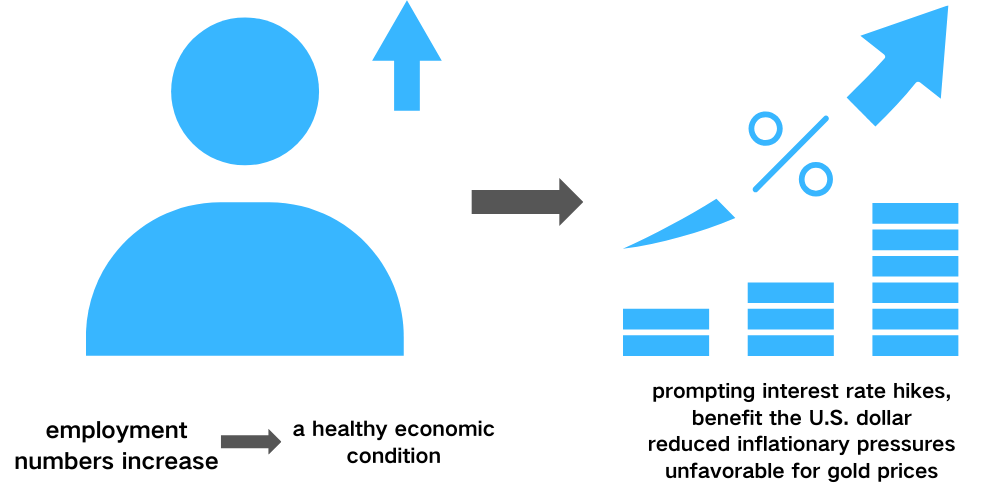
· Significantly influences the U.S. dollar exchange rate: Improvements in employment conditions usually signal robust economic growth, enhancing market confidence in the U.S. economy, thereby attracting more capital inflows into the U.S. dollar market.
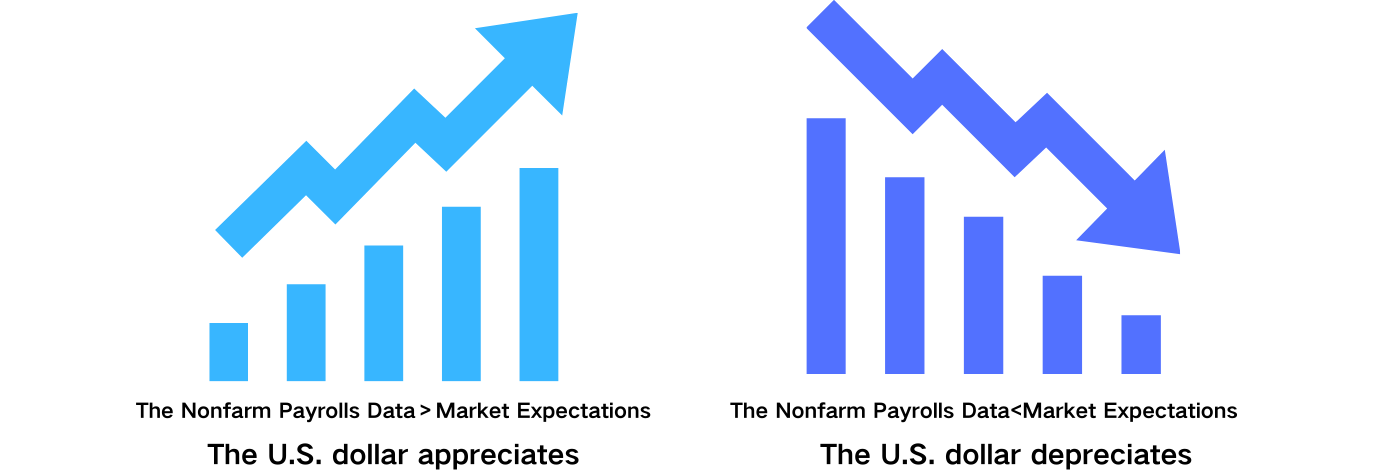
· Affects gold prices: Gold is often seen as a hedge against inflation. In favorable economic conditions, inflationary pressures may decrease, reducing the attractiveness of gold.
In summary, nonfarm payrolls data is a crucial indicator in the field of economics, aiding investors and analysts in understanding the overall state of the U.S. economy and predicting future market trends.


More Content