Investment CoursesChina and the U.S. Meet Again: Market Optimism for Improving Relations, Hong Kong Stock Market Rises Strongly
On the morning of October 30, Chinese President Xi Jinping held a meeting with U.S. President Donald Trump in South Korea. This marks the first face-to-face meeting between the two heads of state since Trump’s return to the White House in January, drawing global attention. Foreign media generally believe that this meeting will provide an opportunity to rebuild strategic trust between China and the U.S., and push their economic and trade relations back to a more rational path, which would bring new stability expectations for the global economy.
Positive Signals from Cooperation
During the meeting, President Xi Jinping stated that China and the U.S. should “be partners and friends.” He emphasized that China’s development and revitalization can go hand in hand with President Trump’s “Make America Great Again” vision, and that the two countries can completely complement each other and prosper together. This statement was seen as a positive signal from China, signaling an easing of tensions and an attempt to push forward the relationship. Xi also pointed out that as the world’s two largest economies, it is normal for China and the U.S. to have differences. The key is to “navigate the right direction and manage the broader situation,” while jointly addressing global challenges.
Positive Market Response: Hong Kong Leads the Asian Markets
Boosted by the meeting between the two heads of state, Asian stock markets generally rose, with Hong Kong’s market showing the most positive reaction. The Hang Seng Index rose 0.77% in early trading, reaching 26,550 points; the Hang Seng China Enterprises Index increased by 0.87%, while the Hang Seng Tech Index gained 0.86%. The banking, insurance, and technology sectors performed well, with investor risk appetite significantly rebounding. The market broadly expects that China-U.S. relations will see a phase of stabilization, injecting confidence into the regional economic and trade outlook.
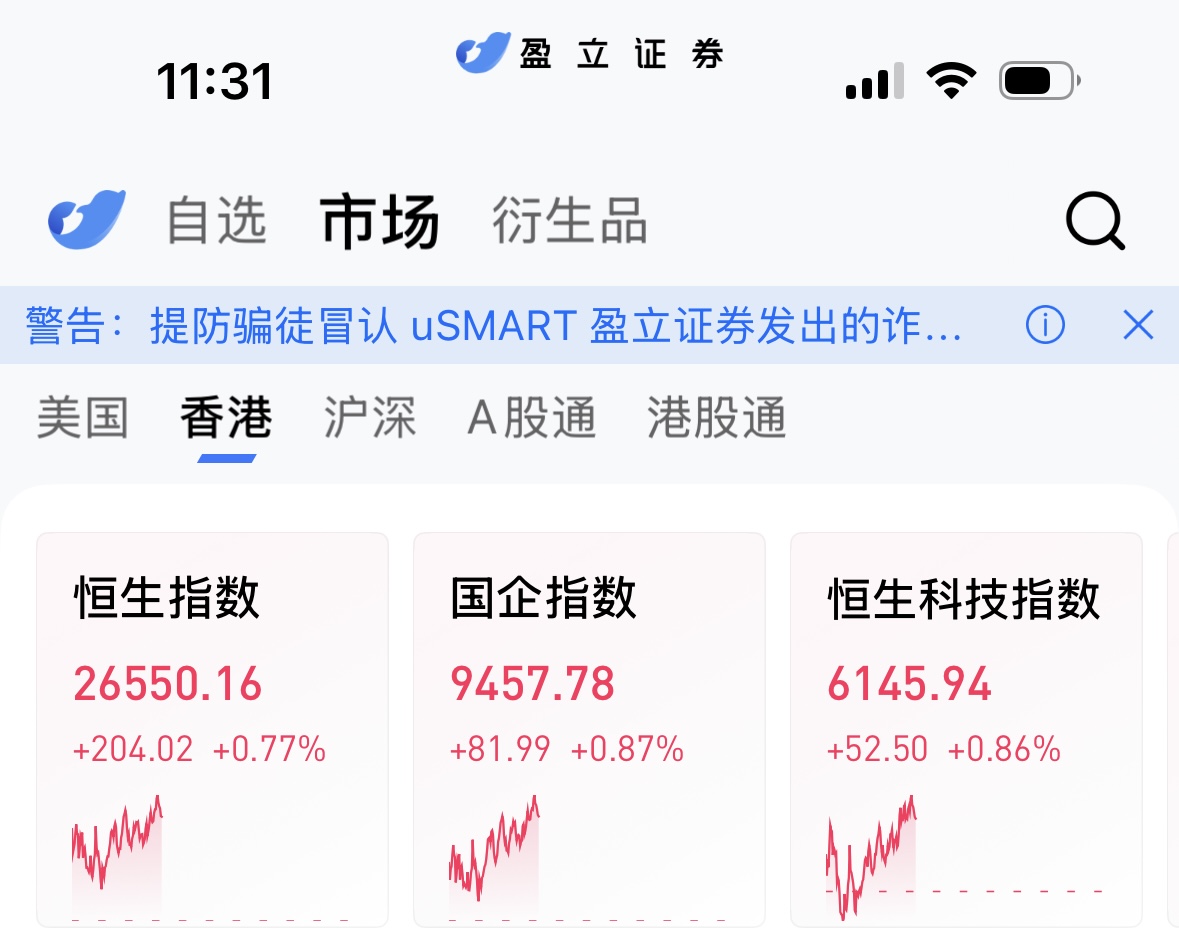 (Image source: uSMART HK app)
Investment Sentiment Improves but Caution Remains
Market sentiment has noticeably improved, but some institutions believe that the current rally primarily reflects expectations. Attention will need to focus on whether concrete results can be achieved in areas like tariffs, technology cooperation, and supply chain security. Analysts caution that if specific measures are not rolled out soon, the market could face short-term volatility and adjustments. However, in the medium to long term, this high-level meeting is expected to improve the policy communication atmosphere, creating a more stable external environment for the capital markets. Against the backdrop of an unstable global economic recovery and rising geopolitical risks, the resumption of high-level China-U.S. dialogues is seen as a key turning point for global stability.


More Content